Many beginner pickleball players often find themselves overwhelmed by the sheer volume of advice available, making it difficult to discern what truly matters for rapid improvement. The struggle to advance quickly can lead to frustration, hindering the enjoyment of this engaging sport. However, by focusing on a few fundamental concepts, significant progress can be achieved in a shorter timeframe. The accompanying video offers concise pickleball tips specifically designed for novice players, cutting through the noise to highlight three essential areas that will elevate your game.
This article further explores these critical strategies, providing additional context and insights to complement the video content. Understanding the ‘why’ behind each action, mastering optimal court positioning, and refining basic paddle technique are core pillars upon which a solid pickleball foundation is built. By systematically addressing these elements, a more consistent and strategic approach to every match can be developed, leading to a noticeable improvement in your overall pickleball game. Let’s delve deeper into these foundational principles that are designed to help you play better, faster.
1. Deciphering Pickleball Strategy: When to Hit Soft, When to Hit Hard
A fundamental understanding of pickleball mechanics is widely regarded as the cornerstone of effective play. It is imperative for beginner players to grasp the difference between “attackable” and “unattackable” balls, as this distinction dictates optimal shot selection. As discussed in the video, the height of the net strap serves as a crucial reference point for this determination. Balls contacted below the net strap are generally considered unattackable, whereas those hit above it are ripe for an aggressive response.
The strategic advantage of hitting a soft shot, often referred to as a dink, into the kitchen is significant. When the ball is placed gently into this non-volley zone, opponents are frequently compelled to make contact from a lower position, below the net height. This forces them to hit upwards on the ball, which typically reduces their ability to generate pace or hit aggressively into your court. Imagine if every return from your opponent was a pop-up; your opportunities for attack would multiply, illustrating the power of the soft game.
Conversely, when an opponent presents an attackable ball – one that is hit high enough to be contacted above the net strap – a more forceful response becomes appropriate. In such scenarios, the ability to hit downwards on the ball with power allows for an aggressive put-away or a shot directed at the opponent’s feet. This distinction forms a primary tactical guideline for every shot that is taken. Therefore, the consistent application of this black-and-white rule is foundational for beginner pickleball strategy, guiding decisions on the court and improving shot effectiveness.
2. Optimizing Court Positioning for Superior Play
Beyond shot selection, proper court positioning is paramount for enhancing one’s pickleball game, especially for beginners. A common misstep observed at the novice level involves players standing still after hitting a shot, passively waiting for their opponent’s return before reacting. This reactive approach, unfortunately, squanders valuable time that could be utilized to gain a significant advantage. The ball’s flight path towards an opponent presents a critical window for repositioning, rather than merely observing the play unfold.
The general principle states that when the ball is traveling away from you, movement should be initiated to improve your court position, which most often means advancing forward. A prime example of this critical movement is evident during the return of serve. It is strongly advised that after hitting the return, players immediately sprint towards the non-volley line, or kitchen line. Arriving at the kitchen line by the time the opponent makes contact with the ball places you in a much stronger defensive and offensive position, particularly if your opponents are still deep in their court.
This proactive movement ensures that you are prepared for the next shot, minimizing the need for last-second scrambles and improving your ability to cover the court. For instance, if an unattackable shot is hit by you, a forward advance is generally recommended to apply pressure and close the net. However, if an attackable shot is given to your opponent (e.g., you hit a ball too high), holding your current position or even subtly retreating can be a more prudent defensive maneuver. The consistent application of these positioning guidelines will dramatically reduce unforced errors and create more opportunities for success in your pickleball matches.
3. Mastering Paddle Technique and Execution
The third crucial aspect for improving beginner pickleball players centers on refining paddle technique and the execution of shots. A prevalent error across all skill levels, but particularly noticeable among beginners, is taking the paddle back too far during the swing. This exaggerated backswing frequently leads to inconsistent contact, reduced power, and a compromised ability to direct the ball accurately. Focus should be placed on keeping the paddle motion primarily in front of the body, fostering a more compact and controlled swing.
One effective method for visualizing and implementing this concept is the “V” technique, where the arms are held at approximately a 90-degree angle, resembling half a square. The goal is to keep all aspects of the shot—the ball, the paddle, and the contact point—within this ‘V’ zone, effectively ensuring everything remains in front of your chest. Imagine your chest as a wall; the paddle should never break this plane during the backswing. This constrained movement encourages a shorter, more efficient swing path, leading to greater control and precision.
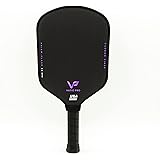
Another practical tip involves utilizing peripheral vision to monitor paddle position. When the paddle is correctly positioned in front, its color should be visible in your peripheral vision, even when in the ready stance. As the paddle is inadvertently taken too far back, it will eventually disappear from your peripheral view, serving as an immediate visual cue for correction. By making this simple adjustment, contact points are improved, timing becomes more consistent, and the overall execution of shots, from dinks to volleys, is significantly enhanced, leading to a more reliable and powerful pickleball game.
Serving Up Answers: Your Pickleball Improvement Q&A
How do I decide whether to hit the pickleball soft or hard?
If the ball is below the net strap, hit it soft (a dink). If it’s above the net strap, it’s ‘attackable’ and you can hit it harder.
Why should I hit soft shots (dinks) into the kitchen?
Hitting soft shots into the non-volley zone forces opponents to hit upwards, reducing their ability to hit the ball aggressively back at you. This creates opportunities for you to attack.
What is important about court positioning after I hit the ball?
After hitting the ball, you should move to improve your position, usually by advancing forward towards the kitchen line. This helps you prepare for the next shot and gain an advantage.
How can I improve my paddle swing technique as a beginner?
Avoid taking your paddle back too far; instead, keep the paddle motion in front of your body for a more compact and controlled swing. Imagine keeping the ball and paddle within a ‘V’ shape made by your arms.