Unlocking Pickleball: Your Essential Guide to Getting Started
Whether you are just discovering the exciting world of pickleball or looking to refine your initial understanding, the video above offers a fantastic introduction. This article is designed to complement that visual guide, providing a comprehensive written resource that clarifies the rules, essential equipment, basic strategies, and the unique scoring system of pickleball. Considered the fastest-growing sport in America, pickleball is an accessible and engaging game for players of all ages and skill levels. Getting started on the right foot ensures a fun and rewarding experience on the court.
Understanding Your Pickleball Essentials: Equipment and Attire
Embarking on your pickleball journey requires minimal equipment, making it an easy sport to pick up. Knowing what you need, and why, can significantly enhance your initial playing experience and prevent common beginner pitfalls.
The Right Paddle for Beginners
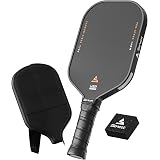
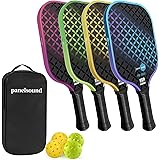
Choosing a pickleball paddle is one of your first decisions. While many options exist, it is generally recommended that new players opt for a composite paddle. These paddles are widely available and offer a good balance of weight and control. Wooden paddles, though often cheaper, are considerably heavier and can be outgrown quickly as skill levels develop.
A suitable composite paddle for a beginner can typically be found within a price range of $50 to $100. At this price point, a paddle is often acquired that will serve a player well for a significant period. Many local pickleball venues or experienced players are often willing to lend equipment, allowing new enthusiasts to try out the game before investing in their own gear.
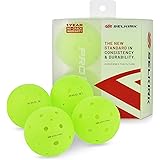
Choosing the Correct Pickleball
Just as there are different types of paddles, there are also different types of pickleballs. The choice of ball is primarily dictated by the playing surface.
- Outdoor Balls: These are typically harder and feature smaller holes. They are designed for play on hard court surfaces, offering more consistent bounce and durability against the elements.
- Indoor Balls: Characterized by a slightly softer, more rubbery feel and larger holes, indoor balls are intended for gym courts with hardwood flooring. Their design allows for a truer bounce on smoother indoor surfaces.
It is always a good idea to bring a few pickleballs to the court, as they can sometimes crack during intense play.
Footwear Matters: Protecting Your Ankles
Proper footwear is paramount in pickleball, not just for performance but, more importantly, for injury prevention. The movements involved in pickleball differ significantly from those in activities like running.
- Hard Courts: Standard tennis shoes are usually the best choice. They are specifically engineered to provide support for multi-directional movement, including the crucial lateral movements common in pickleball.
- Indoor Courts: Basketball or volleyball shoes are well-suited for indoor pickleball. These shoes also offer excellent lateral support and grip on gym floors.
Running shoes, by contrast, are designed primarily for forward-and-backward motion. Wearing them for pickleball can place players at a higher risk of ankle injuries due to the sport’s dynamic lateral movements.
Beyond the Basics: Comfort and Protection
In addition to paddles, balls, and shoes, comfortable athletic clothing is recommended. Staying hydrated is also key, so bringing water is essential. For outdoor play, a hat and sunscreen are often used for protection against the sun.
The Pickleball Court: Your Playing Field
Understanding the pickleball court layout is fundamental to comprehending the game’s rules and strategies. The court shares similarities with a badminton court but has its own unique features.
Dimensions and Key Lines
A standard pickleball court measures 20 feet wide by 44 feet long. It is divided into two halves by a net. The boundaries of the court are defined by the baseline (at the back) and the sidelines (along the sides). Any ball landing within these lines, including on the lines themselves, is considered in-bounds and in play. Conversely, a ball landing outside these boundaries is out of play, resulting in a fault.
Internal lines further delineate the court:
- Centerlines: These lines divide each half of the court into two service areas: a right side and a left side.
- Non-Volley Zone Line: Located 7 feet from the net on each side, this line establishes the “Non-Volley Zone.”
The Net: A Central Divide
The net spans the width of the court, separating the two playing halves. The height of the net is 36 inches at the sidelines and 34 inches in the center. A common fault occurs when a player hits the ball into the net, which immediately ends the point. The primary objective of every shot is to successfully clear the net and land the ball within the opponent’s in-bounds area.
Navigating the Non-Volley Zone (The Kitchen)
The Non-Volley Zone, universally known as “the Kitchen,” is arguably the most distinctive feature of pickleball and a key element that differentiates it from other paddle sports. This area, extending 7 feet from the net on both sides, is governed by a crucial rule: a player cannot volley the ball (hit it out of the air before it bounces) while standing in the Non-Volley Zone, or even on the Non-Volley Zone line.
The purpose of this rule is to prevent players from dominating the net with aggressive overhead shots, which would make rallies shorter and the game less enjoyable. By preventing volleys from within the Kitchen, longer and more strategic rallies are encouraged.
An important detail to grasp is the “momentum rule.” If a player volleys the ball while standing legally outside the Non-Volley Zone, but their momentum carries them into the Kitchen immediately after striking the ball, it is considered a fault. However, players are permitted to enter the Kitchen at any time, as long as they do not hit a volley. For instance, a player can step into the Kitchen, allow the ball to bounce, and then hit it over the net without committing a fault. The critical distinction is between hitting a volley and merely being in the zone.
Mastering Core Pickleball Rules: How the Game Unfolds
Understanding the sequence of play, from the serve to how points are lost, forms the bedrock of playing pickleball effectively.
The Serve: Starting Each Point
Each point in pickleball begins with a serve. In doubles play, which is the most common recreational format, the server stands with both feet behind the baseline. The ball is served diagonally across the net to the opponent’s service court. Crucially, the serve must clear the Non-Volley Zone line and land within the designated service box, which is diagonal from the server. If the ball touches the net on the serve and still lands in the correct service box (a “let”), the serve is replayed. If it lands out, it’s a fault.
The Two-Bounce Rule: Setting the Pace
A unique and fundamental rule in pickleball is the “two-bounce rule,” also sometimes referred to as the “double-bounce rule.” It dictates that the ball must bounce once on each side of the court before it can be volleyed.
- The serve must bounce once on the receiver’s side.
- The return of serve must then bounce once on the server’s side.
After these initial two bounces have occurred, players are permitted to either volley the ball out of the air or let it bounce once before hitting it, for the remainder of the point. The only exception, as previously discussed, is that a volley cannot be hit while a player is inside the Non-Volley Zone. This rule ensures longer rallies and prevents either team from having an unfair advantage immediately after the serve.
Faults: When a Point Ends
A “fault” is any action that results in the loss of a point. The team that commits the fault loses the point. For beginners, awareness of the most common faults is key to understanding why points are won or lost:
- Hitting the ball into the net on any shot.
- Hitting the ball outside the court boundaries (out of bounds).
- Failing to allow the ball to bounce once on your side after the serve or the return of serve (violating the two-bounce rule).
- Hitting a volley while standing inside the Non-Volley Zone or on the Non-Volley Zone line.
- Allowing the ball to bounce twice on your side of the court before returning it.
- Foot faults on the serve (stepping on or over the baseline before striking the ball, or stepping into the Kitchen on a volley).
Pickleball Scoring System: Keeping Track
The scoring system in pickleball is often the most confusing aspect for new players, primarily due to the “three-number call” and the concept of “side-outs.” However, once understood, it becomes quite logical.
Winning a Game and Scoring Points
A standard pickleball game is typically played to 11 points. To win the game, a team must reach 11 points and have a lead of at least two points over their opponents. If the score reaches 10-10, play continues until one team achieves a two-point advantage (e.g., 12-10, 13-11). In some tournament settings, games may be played to 15 or even 21 points, still requiring a two-point margin to win.
A crucial rule is that points can only be scored by the serving team. If the receiving team wins a rally, they do not score a point; instead, they earn the right to serve, which is known as a “side-out.”
Calling the Score: The Three Numbers
Before each serve, the server is responsible for verbally calling out the score. This call consists of three numbers:
- Your team’s score: The points accumulated by the serving team.
- Opponent’s score: The points accumulated by the receiving team.
- Server number: This indicates which player on the serving team is currently serving (1 or 2).
For example, if the serving team has 4 points, the receiving team has 6 points, and the first server on the serving team is about to serve, the score would be called as “4-6-1.” This system provides a clear snapshot of the game’s progress and which player is responsible for the serve.
Understanding Side-Outs and Switching
A “side-out” occurs when the serving team loses a point, resulting in the serve being passed to the opposing team. This is a fundamental concept for understanding the flow of the game.
- Serving Team Switches: When the serving team scores a point, the players on that team switch sides with their partner. The same player continues to serve from their new position until a fault is committed.
- No Switch on Loss: If the serving team commits a fault and loses a point, the players do not switch sides. Instead, the serve passes to their partner (if it’s the first server’s fault), or a side-out occurs (if it’s the second server’s fault).
- Receiving Team Stays: The receiving team does not switch sides regardless of whether they win or lose a point. Their positioning (returner at baseline, partner at NVZ line) is determined by who is designated to receive the serve.
Strategic Positioning for Pickleball Beginners
Effective positioning on the court is a significant factor in a team’s success in pickleball. While various strategies exist, a key objective for beginners is typically to get to the Non-Volley Zone line.
The Advantage of the Non-Volley Zone Line
Strategically, the most advantageous position for both players on a team is at the Non-Volley Zone line. From this forward position, several benefits are obtained:
- Forceful Shots: Players are closer to the net, allowing for more aggressive and downward-angled shots that are difficult for opponents to return.
- Minimized Gaps: Being closer to the net reduces the amount of open court available for opponents to hit into, tightening defensive coverage.
Therefore, a primary objective in pickleball strategy is for both players to advance to the Non-Volley Zone line as quickly and safely as possible after the serve and return. It is recognized that this often requires several well-executed shots to transition from the baseline. Some players, particularly those with a tennis background, may initially prefer to stay further back. While playing style is a personal choice, it is consistently observed that the most skilled and successful pickleball players actively strive for and maintain position at the Non-Volley Zone line due to its inherent geometric and physical advantages.
Starting Positions on the Court
The initial positioning of players for each point is dictated by which team is serving and the specific rules of the game.
- Serving Team: Both players on the serving team begin the point positioned behind the baseline. The server must be behind the baseline to execute a legal serve. The server’s partner also starts back to avoid accidentally volleying the opponent’s return of serve, which, due to the two-bounce rule, must bounce on their side.
- Receiving Team: The player designated to receive the serve stands behind the baseline, ready to return the ball. Their partner, however, positions themselves much closer to the net, typically at the Non-Volley Zone line. This is permissible because the receiving team’s partner is not involved in returning the serve or the first shot from the serving team; their first opportunity to make a play on the ball will come after the two-bounce rule has been satisfied, at which point they can legally hit a volley if positioned correctly.
Special Pickleball Serving Rules: Volley Serve vs. Drop Serve
The serve in pickleball, while initiating every point, also has the most specific rules, primarily intended to limit the power of the serve and keep rallies engaging.
General Serve Requirements
Regardless of the type of serve chosen, certain foundational rules always apply:
- Feet Behind Baseline: The server must have both feet behind the baseline when making contact with the ball. No part of the foot can touch or cross the baseline, or extend into the court, until after the ball has been struck.
- Diagonal Serve: The serve must travel diagonally across the net and land within the opponent’s service court, beyond their Non-Volley Zone line.
The Volley Serve
The volley serve is executed by tossing the ball into the air and hitting it before it bounces. This is the most commonly used serve. To be considered a legal volley serve, three specific criteria must be met:
- Upward Arc: The paddle head must be moving in an upward arc at the moment of contact with the ball.
- Paddle Head Below Wrist: The highest point of the paddle head must be below the highest part of the server’s wrist when the ball is struck.
- Contact Below Waist: Contact with the ball must be made below the server’s waist. To provide a consistent reference, the navel is generally accepted as the marker for the waistline.
These rules are designed to prevent an overly powerful, tennis-like overhead serve, ensuring that the game remains accessible and promotes longer rallies.
The Drop Serve
An alternative to the volley serve is the drop serve, where the server releases the ball and allows it to bounce once before striking it. The advantage of the drop serve, particularly for new players, is that the strict requirements of the volley serve (upward arc, paddle below wrist, contact below waist) do not apply. This often makes timing the serve easier.
The rules specific to the drop serve are:
- Unlimited Bounces: There are no restrictions on how many times the ball is allowed to bounce after being released, although a single bounce is often preferred for optimal contact height.
- Bounce Location: The ball can bounce anywhere on the court—behind the baseline, on the baseline, or even inside the court—before it is hit.
- Simple Release: The ball must be released without any downward or upward propulsion. It should be a simple drop, using only the force of gravity.
While the volley serve often allows for a higher contact point (which can result in a more effective serve by requiring less upward trajectory to clear the net), many new pickleball players find the drop serve easier to master initially. Consistency in getting the serve in play is usually more important than maximizing its impact, so trying both methods is encouraged to find what works best for individual players.
Navigating the First Serve Exception Rule
To ensure fairness and prevent one team from gaining an insurmountable lead early in the game, a special “first server exception rule” is applied at the very beginning of a match.
Mitigating Early Game Dominance
This rule specifically addresses the initial service turn of the game. For the team that starts as the serving team, only one player will have the opportunity to serve during that first turn. Once this player loses a point (commits a fault), the serve is immediately passed to the opposing team (a side-out occurs). The first server’s partner does not get a chance to serve during this initial rotation.
After this first service turn and subsequent side-out, the game reverts to the standard scoring rules, where each player on a team will have their turn to serve after every side-out before the serve eventually passes back to the opponents.
The 0-0-2 Starting Score
This exception explains why the very first score called out at the beginning of a pickleball game is “0-0-2.” The “2” indicates that, for this initial service turn, it is as if the second server on the team is serving first. This implicitly means that once a fault is committed, the first server on that team will not get their turn, and a side-out will occur.
For example, if the first team serves and immediately loses the point, the score then becomes 0-0-1 as the serve passes to the opposing team, signifying that their first server is now beginning their turn, and from this point onward, both players on each team will get their full service turns as described in the general scoring rules. This initial setup is designed to prevent a single dominant serving team from quickly running away with the game.
Beyond the Kitchen: Your Pickleball Questions Answered
What basic equipment do I need to start playing pickleball?
To start playing pickleball, you will need a composite paddle, either an indoor or outdoor pickleball depending on the court, and court-specific athletic shoes like tennis or basketball shoes.
What is ‘the Kitchen’ in pickleball?
‘The Kitchen’ is the common name for the Non-Volley Zone, an area 7 feet from the net on both sides of the court. Players are not allowed to hit the ball out of the air (volley) while standing inside this zone or on its line.
What is the ‘two-bounce rule’ in pickleball?
The ‘two-bounce rule’ means that after the serve, the ball must bounce once on the receiver’s side, and then the return of that serve must bounce once on the server’s side. After these two bounces, players can then choose to volley the ball or let it bounce.
How do you score points in pickleball?
Only the serving team can score points in pickleball, and a game is typically played to 11 points, requiring a two-point lead to win. If the receiving team wins a rally, they don’t score a point but gain the right to serve, which is called a ‘side-out’.
What are the two main types of serves in pickleball?
The two main types of serves are the Volley Serve, where the ball is hit out of the air, and the Drop Serve, where the ball is allowed to bounce once before being hit. Both must be served underhand and diagonally across the net.