Staying current with the evolving landscape of pickleball regulations is crucial for every player, from casual enthusiasts to competitive athletes. The USA Pickleball organization consistently reviews and refines its rulebook to enhance fairness, promote sportsmanship, and adapt to the sport’s rapid growth. As detailed in the video above, several key new Pickleball Rules for 2025 are set to take effect on January 1st, promising to clarify some long-standing ambiguities and introduce new dynamics to the game. Understanding these updates is not just about avoiding faults; it’s about mastering the game and ensuring a level playing field for everyone.
These aren’t merely minor adjustments; they represent thoughtful considerations designed to improve the player experience and reduce on-court disputes. From precise definitions of volleys near the non-volley zone to revised protocols for line calls and even equipment standards, each modification carries practical implications for how you play and officiate. Familiarizing yourself with these changes now will equip you to navigate games confidently, explain calls effectively to your opponents and partners, and uphold the spirit of fair play that defines pickleball.
1. Refining the Volley Definition and No-Volley Zone Interaction
One of the most significant changes for 2025 addresses the definition of a volley and its intricate relationship with the no-volley zone, commonly known as the kitchen. Previously, the rule stated that a volley encompassed the entire action: the swing, contact with the ball, and the momentum carrying through the shot. This broad definition often led to confusion, particularly when a player’s initial swing or body movement extended into the kitchen before actual ball contact.
A. The New Volley Commencement Point
The updated rule provides a much clearer boundary: a volley does not officially begin until the paddle makes contact with the ball. This critical distinction simplifies previous interpretations, stating that any paddle movement or body positioning prior to the moment of impact is not considered part of the volley itself. For instance, if you initiate your swing while momentarily touching the kitchen line, but your feet are firmly planted outside the no-volley zone at the exact moment of ball contact, that action is now deemed legal. This clarification primarily benefits aggressive players who may inadvertently drift near the line during their wind-up but recover their foot positioning before striking the ball, eliminating many contentious calls.
This adjustment also applies to scenarios where a player might start their swing from within the kitchen, but then quickly move both feet behind the no-volley line before hitting the ball. Under the old rules, starting the swing inside the kitchen could have been interpreted as part of the volley, resulting in a fault. However, the 2025 rule emphasizes that as long as both feet are legally positioned behind the line at the point of contact, the volley is good. This change aims to reduce subjective calls based on a player’s preparatory movements, putting the focus squarely on the feet’s location at the moment of impact.
B. Clarifications on Follow-Through and Jumping
While the initial phase of the volley has been redefined, crucial restrictions regarding follow-through and body movement into the kitchen remain firmly in place. It is still a fault if a player makes legal contact with the ball outside the no-volley zone, but their momentum carries them or their paddle into the kitchen *after* the ball has been struck. This ensures that players cannot use the momentum of their shot to gain an unfair advantage by entering the restricted zone immediately following their stroke, maintaining the strategic importance of the kitchen line.
Similarly, the rule against jumping from within the kitchen to hit a volley continues. Players must have both feet securely grounded outside the no-volley zone at the moment of ball contact to execute a legal volley. There is no allowance for players to leap or jump out of the kitchen while simultaneously striking the ball. These nuanced elements of the rule aim to strike a balance between clarifying ambiguous situations and preserving the fundamental strategic challenge presented by the no-volley zone in pickleball.
2. Eliminating Spectator Influence on Line Calls
Pickleball is a sport that heavily relies on the integrity of its players to make honest line calls, particularly in recreational or unofficiated matches. To reinforce this foundational principle of fair play, the USA Pickleball rulebook for 2025 introduces a significant change regarding spectator influence on these critical decisions. This update aims to remove any external factors that could sway a player’s judgment, ensuring that calls are made solely by those actively involved in the point.
A. The Rule Against Outside Input
The new rule explicitly prohibits players from being influenced by outside spectators or other players not directly involved in their game when making line calls. This means that if a ball lands very close to a line, and you are unsure whether it was in or out, you cannot use an opinion or call from someone on an adjacent court or from the sidelines to make your decision. To call a ball out, you must be 100% certain based on your own visual assessment or that of your partner. The intent is to foster an environment where players trust their own judgment and maintain absolute accountability for their calls.
This regulation is crucial for competitive integrity, especially in tournaments where close matches can be decided by a single point. Relying on external voices can lead to disputes, animosity, and a general erosion of trust between teams. By strictly limiting line call authority to the players on court, the game promotes a greater sense of self-reliance and responsibility. It reinforces the idea that what happens within the boundaries of a specific game should be determined by those competing within those boundaries, free from external interference.
B. Upholding On-Court Integrity
For players, this means cultivating a sharper eye and a commitment to honest self-assessment. If you cannot definitively determine if a ball is out, the benefit of the doubt must always go to your opponent, meaning the ball is considered in. Practicing objective line calling, even in casual play, helps build the necessary discipline for more competitive environments. This rule also subtly encourages partners to communicate more effectively about close calls, ensuring a shared understanding and agreement before any official declaration is made.
In situations where external comments might inadvertently occur, players are expected to disregard them and focus only on their own perception. If a spectator’s call causes confusion, players should politely reiterate the rule to anyone attempting to influence the game, ensuring the integrity of the match remains paramount. This new directive strengthens the spirit of fair play, placing the onus entirely on the active participants to make accurate and unbiased decisions.
3. The Paddle Toss Serve Option
Innovation in pickleball is not just limited to advanced paddle technology; it also extends to how fundamental mechanics of the game are executed. For 2025, the USA Pickleball rulebook introduces an interesting new option for serving: the paddle toss serve. This modification offers an alternative to the traditional hand toss, providing players with more flexibility, though with an important caveat.
A. Introducing the Paddle Serve
Under the new rules, players are now permitted to toss the pickleball into the air using their paddle instead of their non-hitting hand. This allows for a different rhythm and approach to the serve, potentially aiding players who struggle with a consistent hand toss or those who find the paddle toss more natural. However, the critical restriction accompanying this new technique is that players cannot impart any spin on the ball using the paddle during the toss. Just as with a hand toss, the ball must be released without any intentional spin before it is struck by the serving paddle.
This spin restriction applies universally, whether you are performing a traditional serve or opting for a drop serve. If a player chooses to use their paddle for a drop serve, the same rule against adding spin with the paddle applies. The ball must simply be dropped from the paddle face without any rotational force, ensuring that the serve’s trajectory and bounce are dictated by the strike itself, not by pre-existing spin from the toss. This maintains a consistent standard for fairness in serving mechanics, regardless of the method used to elevate the ball.
B. Who Benefits and Practical Considerations
While the speaker in the video speculates this rule might primarily benefit adaptive players, such as those with one arm or limited hand dexterity, its application is universal. It opens a new avenue for all players to experiment with their serve technique, potentially finding a more comfortable and consistent toss method. For many, however, the traditional hand toss remains the most intuitive and widely practiced approach, offering a direct control that a paddle toss might not easily replicate for all players.
For the majority of players, sticking to the hand toss is likely the most practical advice, especially if it’s already a well-honed part of their game. The hand toss generally allows for greater precision and consistency in ball placement, which is vital for an effective serve. While the paddle toss offers an interesting alternative, players should only adopt it if they find it genuinely improves their consistency without violating the crucial “no spin” rule. Experimentation in practice is encouraged, but avoiding unnecessary complexity during competitive play often leads to better results.
4. The Legally Binding “Wait” for Serve Readiness
Fair play dictates that a server should never initiate a serve until their opponent is fully ready to receive it. While this has long been an unwritten rule of pickleball etiquette, the 2025 rule changes formalize this expectation, providing players with a legal recourse against “quick serves.” This update clarifies a previous ambiguity, giving the receiving team an explicit tool to ensure readiness before a point commences.
A. Formalizing the “Wait” Call
Previously, if a server called the score and then immediately served while an opponent was clearly not ready, a verbal “Wait” from the receiving player might have technically been ignored. The 2025 rule amends this by explicitly stating that if a receiving player gives a verbal indicator such as “Wait” after the score has been called, the server is obligated to wait for them to get into position. If the server proceeds with the serve despite the “Wait” command, the point is replayed. This effectively gives the receiving team an official mechanism to prevent premature serves.
This rule change is a welcome addition, as it eliminates any doubt about the server’s responsibility to ensure the receiving team is prepared. It transforms a courtesy into a codified requirement, strengthening the framework of fair play. Players no longer have to rely solely on the server’s discretion or good sportsmanship; they now possess a legitimate way to pause the game if they are caught off guard or need an extra moment to position themselves properly for the return.
B. Combating Quick Serves and Promoting Etiquette
The primary benefit of this rule is its ability to combat quick serves, a tactic some players might use to gain an unfair advantage or simply due to impatience. Quick serves can disrupt a receiver’s rhythm, positioning, and overall readiness, leading to easy points for the server that don’t reflect genuine skill. By making the “Wait” call legally binding, the game ensures that points are earned fairly, starting from a mutually agreed-upon state of readiness.
Beyond the verbal “Wait,” players can also signal their unreadiness by simply raising a hand, a common practice borrowed from sports like tennis. This visual cue serves the same purpose, indicating to the server that more time is needed. Both methods reinforce the importance of mutual respect and good sportsmanship on the court. It reminds all players that the game thrives on fair competition, where every point begins with both sides fully prepared, rather than relying on tactical advantages gained from opponent’s unreadiness.
5. Ensuring Paddle Fairness and USA Pickleball Approval
The equipment used in any sport can significantly influence gameplay, and pickleball is no exception. As paddles become increasingly sophisticated, the USA Pickleball organization has recognized the need to implement rules that prevent any single piece of equipment from dominating the sport or fundamentally altering its strategic nature. The 2025 rule changes include important guidelines regarding paddle approval, reinforcing the commitment to competitive balance.
A. The Anti-Domination Paddle Principle
At the core of this rule is the principle that no paddle should be so technologically superior that it single-handedly dictates game strategy. The primary concern revolves around paddle power. If paddles were allowed to become excessively powerful, the strategic importance of soft game shots—such as dinks and drops—would diminish. Games could devolve into mere power-hitting contests, potentially making pickleball less engaging and less accessible for a wide range of players. The essence of pickleball, with its blend of finesse, strategy, and power, needs to be preserved, and paddle regulations are key to achieving this.
Numerous players and governing bodies have rallied to ensure that paddle advancements remain within sensible limits, promoting skill and strategy over raw equipment advantage. This proactive approach helps maintain the integrity of the game, ensuring that a player’s talent and tactical decisions are the primary drivers of success, rather than solely relying on the power output of their equipment. The goal is to encourage innovation within a defined framework that safeguards the sport’s fundamental characteristics.
B. The Importance of USA Pickleball Approved Paddles
For players, the practical takeaway is straightforward: always use a USA Pickleball approved paddle. These paddles undergo rigorous testing to ensure they comply with established standards for deflection, surface roughness, and overall construction. An approved paddle will typically feature a visible USA Pickleball (formerly USAPA) seal or stamp, usually located near the bottom of the paddle face or on the throat.
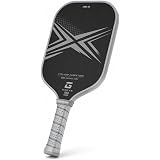
Using a non-approved paddle, whether intentionally or inadvertently, could result in an unfair advantage and is considered a violation of the rules. While it’s natural to seek the best equipment for your game, the emphasis should be on finding a high-quality paddle that enhances your skills within the legal parameters, rather than one that confers an unfair, illegal edge. For example, a quality Gen 2 thermoformed paddle with a T700 carbon fiber face, known for its balance of power and control with excellent grit for spin, is a prime example of high-performance equipment that adheres to regulations. These advanced paddles, often retailing for $150-$200, offer significant benefits without compromising the integrity of the game. Always verify approval before purchasing and playing, ensuring your equipment contributes to a fair and competitive match.
6. Partner Agreement for Foot Fault Calls
Disputes over foot faults, whether at the non-volley zone line or during a serve, are common in pickleball, often leading to awkward pauses and disagreements. To streamline these situations and introduce greater clarity, the 2025 rules introduce a specific protocol for calling foot faults that emphasizes team consensus. This change aims to reduce subjective arguments and ensure a consistent standard for challenging a perceived infraction.
A. Team Consensus for Replays
The new rule stipulates that if you believe your opponent committed a foot fault (either on the kitchen line during a volley or while serving) and they dispute it, both you AND your partner must agree that the fault occurred to compel a replay of the point. This means a single player’s conviction is not enough; the entire team must be in agreement. If one partner thinks a foot fault happened but the other doesn’t, the call cannot stand, and the point proceeds as if no fault occurred.
Furthermore, the rule includes a critical “benefit of the doubt” clause: if there is any disagreement between partners on either side regarding a foot fault, the ruling will ultimately benefit the opposing team. For instance, if your team believes an opponent foot-faulted, but your partner isn’t sure, the point will be awarded to your opponents. Conversely, if your opponents committed what you saw as a foot fault, but their team disagrees amongst themselves, your team would get the point. This provision encourages clear, unanimous agreement within a team before making a challenge, minimizing contentious solo calls.
B. Avoiding Disputes and Ensuring Clarity
This rule promotes improved communication and shared observation between partners. It requires teams to be on the same page when it comes to identifying and calling foot faults, reducing instances where a point is replayed or awarded based on a single player’s potentially biased perspective. By making team consensus a prerequisite, the rule aims to limit unnecessary stoppages and keep the game flowing smoothly.
For competitive play, this new guideline is particularly impactful. It means that teams must develop a synchronized approach to observing foot placement, especially around critical areas like the kitchen line during fast volleys or the baseline during serves. Players should practice communicating effectively with their partners during play, perhaps with subtle nods or brief confirmations, to ensure they can quickly reach a consensus on any perceived foot fault, thereby upholding the fairness of each point played.
7. Expanding the Responsibility of Calling Faults
Fair play in pickleball extends beyond simply adhering to the rules; it also involves actively acknowledging when a rule has been broken, even by oneself or a partner. Building upon the long-standing expectation for players to call their own faults, the 2025 rules introduce an important amendment that broadens this responsibility to include a player’s partner. This change reinforces a collective commitment to honesty and sportsmanship on the court.
A. Beyond Self-Calling: The Partner’s Role
The previous rule stipulated that if a player committed a fault—such as stepping into the kitchen during a volley (a foot fault), touching the net, or hitting the ball out of bounds—they were expected to call it on themselves. The new amendment significantly expands this by adding the phrase “or your partner.” This means that if you witness your partner commit a fault and they do not immediately call it on themselves, you are now legally obligated to acknowledge that fault to the opposing team. Failing to do so would constitute a breach of the rules by your team.
This rule applies to a wide range of common faults that result in the opposing team winning the point. This includes foot faults at the kitchen line, foot faults during a serve (stepping on or over the baseline before hitting), double bounces (hitting the ball after it has bounced twice on your side), or any other clear infraction. The principle is clear: if an illegal action occurs by anyone on your team, the opposing team must be made aware of it to maintain fair play. It elevates the responsibility from an individual act of honesty to a shared team commitment.
B. Promoting Uncompromising Fair Play
The ethical implications of this rule are profound. It transforms self-correction into a team-wide mandate, promoting an environment of uncompromising integrity. While it might initially feel uncomfortable to call a fault on your own partner, the rule underscores that upholding the spirit of the game takes precedence over winning at all costs. It encourages a higher standard of sportsmanship, where the fairness of the competition is prioritized above individual or team gain from an uncalled infraction.
This amendment can also foster greater trust between competing teams. When players consistently demonstrate a willingness to call faults on themselves and their partners, it builds a reputation for honesty and integrity, contributing to a more respectful and enjoyable playing environment. Ultimately, the expanded responsibility for calling faults reinforces the core values of pickleball, ensuring that success is earned through skill and adherence to the rules, rather than through overlooked infractions.
Dinking Doubts? Your 2025 Pickleball Rules Q&A
What are the new pickleball rules for 2025 about?
The new rules, effective January 1st, are designed to enhance fairness, promote sportsmanship, and improve the overall player experience. They clarify existing rules and introduce new protocols for various aspects of the game.
How has the rule about volleys near the ‘kitchen’ changed?
The updated rule clarifies that a volley officially begins when the paddle makes contact with the ball. This means your feet must be outside the no-volley zone (kitchen) only at the exact moment of impact.
Can other people, like spectators, help with line calls in pickleball?
No, the new rules explicitly prohibit players from being influenced by outside spectators or players not involved in their game for line calls. You and your partner must be 100% certain based on your own visual assessment to call a ball out.
What should I do if the server serves before I’m ready?
If you’re not ready after the score is called, you can verbally say ‘Wait’ or raise a hand to signal your unreadiness. The server is then obligated to wait, and if they serve prematurely, the point will be replayed.
Why is it important to use a USA Pickleball approved paddle?
Using a USA Pickleball approved paddle ensures fair play and prevents equipment from giving an unfair advantage, maintaining the strategic balance of the sport. These paddles are tested to comply with standards for performance and construction.