Imagine stepping onto the pickleball court, feeling that familiar anticipation, only to have your perfectly aimed drive fall short or a crucial dink die weakly at the net. You know your technique is solid, but something just isn’t clicking with your equipment. As highlighted in the accompanying video, that seemingly insignificant strip of material could very well be the missing piece in your performance puzzle. While it won’t instantly crown you the world’s best, strategic application of lead or tungsten tape to your pickleball paddle can profoundly impact your game, transforming how your paddle interacts with the ball and, consequently, how you execute every shot.
This nuanced approach to paddle customization, a secret weapon for many elite pickleball players, extends far beyond simply adding weight. It’s an intricate blend of physics, personal preference, and strategic placement, designed to fine-tune your paddle’s characteristics. Understanding the ‘why’ behind these modifications unlocks a new dimension of control, power, and stability, allowing players to dial in their gear for a truly personalized edge on the court. Delving into the mechanics of paddle weighting reveals how these small adjustments can lead to monumental improvements in your pickleball paddle performance.
Understanding the Physics of Pickleball Paddle Customization
Firstly, the core concept behind weighting a pickleball paddle revolves around modifying its mass and, critically, its distribution. When the video mentions improving power and increasing the sweet spot, it touches upon fundamental principles of physics. Adding weight primarily impacts the paddle’s swing weight and its moment of inertia, both crucial determinants of how a paddle feels and performs during play. A higher swing weight can translate to more power on drives and serves, as the paddle carries more kinetic energy into the ball upon contact, a concept familiar to tennis and badminton players alike.
Beyond this initial adjustment, the moment of inertia, often referred to as twistweight, quantifies a paddle’s resistance to twisting upon off-center hits. By strategically distributing weight, especially towards the paddle’s edges, players can significantly increase this moment of inertia. This means that when the ball makes contact outside the precise center, the paddle is less likely to twist in the player’s hand, leading to a more consistent and predictable ball trajectory. Consequently, the effective sweet spot, the area where optimal contact is made, feels larger and more forgiving, reducing those frustrating “dead ball” moments mentioned in the video.
Lead Tape vs. Tungsten Tape: Material Science on the Court
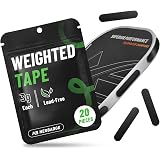
The video briefly introduces both lead tape and tungsten tape, noting Selkirk’s offering of the latter. While both serve the purpose of adding weight, their material properties present distinct advantages and considerations. Lead tape, traditionally favored in racquet sports, is denser and more malleable, making it easier to cut and conform to paddle edges. However, its lead content necessitates covering it with electrical tape, as advised, due to health and safety concerns regarding skin contact and potential lead transfer, a crucial point often overlooked by enthusiastic players.
Tungsten tape, conversely, offers a non-toxic alternative with a similar, if not higher, density to lead. This means equivalent performance benefits can often be achieved with less material, potentially making it a cleaner and safer option for repeated handling. Manufacturers like Selkirk actively promote tungsten due to these safety advantages, positioning it as a modern, high-performance solution for discerning players. The choice between the two often boils down to personal preference, accessibility, and an individual’s comfort with handling lead-based products, though the trend leans towards safer, high-density alternatives.
Strategic Weight Placement for Optimal Pickleball Paddle Performance
Crucially, the science behind paddle weighting isn’t just about adding mass; it’s about *where* that mass is added. The placement of lead or tungsten tape fundamentally alters the paddle’s balance point, swing weight, and twistweight, dictating how your pickleball paddle will respond to your strokes. Understanding these precise effects allows for highly targeted customization, tailoring the paddle to a player’s unique style and physical capabilities, enhancing their overall pickleball paddle performance.
-
Top of the Paddle Head (12 o’clock position): Placing tape here significantly increases the swing weight. This is ideal for players seeking maximum power on drives, serves, and overheads, as the paddle gains momentum more readily. Imagine if your overhead smash felt effortlessly more powerful, driving the ball deep with authority; this placement could contribute to that sensation. However, it can also make the paddle feel heavier and slower to maneuver for quick volleys or dinks, requiring stronger forearm and wrist control.
-
Sides of the Paddle Head (3 & 9 o’clock positions): This is arguably the most common and versatile placement, directly addressing the video’s point about increasing the sweet spot. Adding weight here dramatically boosts the paddle’s moment of inertia, making it far more stable on off-center hits. This translates to greater control and consistency, as the paddle resists twisting, allowing players to maintain accuracy even when contact isn’t perfect. Picture a scenario where your backhand dinks, even when struck slightly towards the edge, still land precisely where intended; this stability is the direct benefit.
-
Paddle Throat/Base (near the handle): Weight added closer to the handle, particularly in the throat area, has a more subtle but important effect. It increases the overall static weight of the paddle but minimizes its impact on swing weight and maneuverability. This can be beneficial for players looking for more solid feel, vibration dampening, and improved stability without making the paddle feel head-heavy or cumbersome. It effectively shifts the balance point towards the hand, potentially enhancing touch and control.
-
Under the Grip (Handle Weighting): While not explicitly visible, adding weight directly under the grip can significantly alter the paddle’s balance point. This shifts the balance closer to your hand, making the paddle feel lighter and faster for quick hands battles at the net, despite increasing its overall weight. This setup is often preferred by players who prioritize maneuverability and quick reflexes, providing a distinct advantage in fast-paced exchanges and volley wars.
The Art of Experimentation and Fine-Tuning Your Paddle
The video astutely advises players to “feel free to play around with it to find what feels best,” which is perhaps the most critical takeaway for pickleball paddle customization. There’s no universal formula; the optimal weighting scheme is deeply personal, influenced by a player’s physique, stroke mechanics, playing style, and even their preferred paddle core and surface. Incremental adjustments are paramount in this iterative process. Starting with small amounts, perhaps 1-2 grams at a time, and meticulously testing the paddle in various game situations allows players to discern the subtle yet significant changes in feel and performance.
This systematic approach involves not only trying different placements but also logging your observations. Documenting how each modification affects your power, control, consistency, and maneuverability across different shots (drives, dinks, volleys, serves) provides invaluable data. A slight adjustment that enhances your power on one shot might inadvertently diminish your touch on another. Patience and careful evaluation during practice sessions are key to discovering the perfect balance, ensuring your enhanced pickleball paddle truly complements your game rather than hindering it.
Mitigating Risks: Weight, Balance, and Injury Prevention
Finally, the cautionary note in the video about using “too much” weight, potentially making the paddle “too heavy and slow and even contribute to pickleball elbow,” is a vital consideration for any player undertaking paddle modification. Overweighting a pickleball paddle can lead to several adverse outcomes. Excess weight not only reduces paddle head speed, impacting power and spin potential, but it also increases the physical demand on the player’s arm and shoulder, accelerating fatigue.
Furthermore, an improperly weighted paddle, especially one that becomes too head-heavy without sufficient counterbalance, can put undue stress on the forearm and elbow tendons. This imbalance can contribute to overuse injuries like pickleball elbow (lateral epicondylitis), a common affliction for racquet sport enthusiasts. It is crucial to maintain a healthy respect for your body’s limits and to prioritize proper form and conditioning alongside gear customization. Professional guidance from a coach or physical therapist can be invaluable if you experience discomfort, ensuring that your quest for improved pickleball paddle performance doesn’t come at the cost of your long-term health and enjoyment of the game.
Elevate Your Pickleball Paddle: Q&A
What is paddle customization in pickleball?
Paddle customization involves adding small amounts of lead or tungsten tape to your paddle to change its weight and balance. This helps fine-tune how your paddle feels and performs on the court.
Why would I want to customize my pickleball paddle?
Customizing your paddle can help you hit with more power, increase the effective ‘sweet spot’ for more consistent shots, and improve the paddle’s stability when you hit the ball.
What types of materials are used to customize a pickleball paddle?
Players typically use either lead tape or tungsten tape. Tungsten tape is a popular modern choice because it’s non-toxic and often preferred for safety over lead tape.
Where do I put the tape on my paddle?
Tape can be placed in different strategic locations, such as the top of the paddle head for more power, the sides for increased stability, or near the handle for better maneuverability. Each placement changes the paddle’s feel differently.
Can customizing my paddle cause any problems?
Yes, adding too much weight can make your paddle feel slow and heavy, potentially leading to fatigue or even injuries like ‘pickleball elbow.’ It’s important to make small, incremental adjustments and test them out.