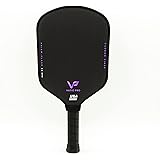
The quest for the perfect pickleball paddle often leads players down a rabbit hole of specifications, materials, and price points. As observed in the accompanying video, a striking comparison was made between a $35 paddle and a $300 paddle, revealing intriguing performance disparities. While the more affordable paddle registered a ball speed of 45 MPH, its higher-priced counterpart achieved a slightly faster 46 MPH. A more significant difference was detected in spin generation, with the budget option scoring 3/10 compared to an impressive 9/10 for the premium pickleball paddle.
Understanding these distinctions is crucial for players seeking to enhance their game without overspending. Many factors contribute to the performance and cost of pickleball paddles, extending far beyond the basic observations of speed and spin. The technological advancements in paddle construction have made equipment a vital component of a player’s strategy on the court.
Decoding Pickleball Paddle Power and Velocity
The marginal one MPH difference in ball speed between the inexpensive and premium paddle, as shown, might suggest that raw power is not solely dictated by price. However, several elements within a pickleball paddle’s design are known to influence how much force can be transferred to the ball. The core material and its thickness primarily determine a paddle’s power characteristics, alongside its overall weight.
Paddles with a thicker core, often made from polypropylene honeycomb, generally offer more power and a larger sweet spot. A greater mass in a paddle’s head can also contribute to higher ball velocity, though this must be balanced with control. The way energy is absorbed and then redistributed upon impact with the pickleball is meticulously engineered into higher-end models. This intricate engineering allows for consistent power delivery across the entire face of the pickleball paddle.
The Art of Spin: Surface Technology Explained
The most dramatic difference highlighted in the video was the capability to impart spin, ranging from 3/10 to 9/10. Spin is a critical component of modern pickleball, allowing players to control ball trajectory, bounce, and placement with greater precision. This enhanced spin generation is predominantly attributed to the surface material and texture of the pickleball paddle.
Premium paddles often feature advanced surface materials like raw carbon fiber or specially textured graphite, designed to create maximum friction with the pickleball. These surfaces are sometimes engineered with microscopic dimples, grit, or a specific weave pattern to “grip” the ball more effectively during contact. This allows for significant topspin or backspin to be imparted, which can curve the ball or make it dip sharply over the net. Fiberglass surfaces, commonly found on less expensive pickleball paddles, typically offer less friction and thus reduced spin potential.
Beyond Power and Spin: What Elevates a Paddle’s Price?
While power and spin are key performance indicators, numerous other factors contribute to the price and overall quality of a pickleball paddle. These elements collectively define the playability, durability, and feel that separate entry-level equipment from professional-grade gear. Understanding these components helps in making an informed purchasing decision.
Core Construction and Materials
The core of most pickleball paddles consists of a honeycomb structure, primarily made from polymer (polypropylene), aluminum, or Nomex. Polymer cores are widely popular due to their excellent balance of power, control, and vibration dampening. Thicker polymer cores (16mm-19mm) are typically found in more expensive paddles, offering enhanced sweet spots and more consistent energy transfer. The density and uniformity of the honeycomb structure are meticulously controlled in premium pickleball paddles.
Surface Materials and Layers
The material covering the paddle’s core plays a significant role in performance and cost. Graphite and carbon fiber are premium choices, known for their lightweight nature, stiffness, and ability to generate spin. Carbon fiber, especially raw or specialized carbon weaves, is particularly effective for spin. Fiberglass surfaces are more affordable and offer a good blend of power and control but generally lack the textured feel needed for high spin. Multiple layers of advanced materials are sometimes utilized to optimize feel and durability in high-end pickleball paddles.
Manufacturing Processes and Technology
The techniques used to construct a pickleball paddle can greatly influence its performance and longevity. Thermoforming, for example, is a process where the paddle is molded under heat and pressure, creating a unibody construction that is highly durable and stable. This process is complex and often reserved for expensive paddles, contributing to their higher cost. Quality control during manufacturing also ensures consistent performance across units, which is a hallmark of reputable brands.
Weight Distribution and Balance
The overall weight and how it is distributed throughout a pickleball paddle impact swing speed, power, and control. A head-heavy paddle might offer more power but could be harder to maneuver quickly at the net. Conversely, a lighter, more balanced paddle allows for faster hand speeds but may require more player effort to generate power. Premium paddles are often designed with precise weight distribution to offer an optimal balance for advanced play. The grip size and material also play a role in this balance, enhancing player comfort and reducing fatigue.
Grip Quality and Ergonomics
The quality and design of the grip are often overlooked but are essential for comfort, sweat absorption, and control. Ergonomic grips are sometimes integrated into more expensive pickleball paddles, providing a more natural feel and reducing strain during long play sessions. The materials used in the grip itself, such as specialized polymers or cushioned wraps, also contribute to the overall feel and durability of the paddle.
Is a $300 Pickleball Paddle Always Worth It? Finding Your Sweet Spot
The question of whether to invest in a premium pickleball paddle ultimately depends on individual player needs, skill level, and frequency of play. For beginners or casual players who play infrequently, an inexpensive paddle like the $35 option might be perfectly adequate. The slight difference in MPH might not be noticeable, and spin might not be a primary concern during initial learning phases. Many players are able to enjoy the game immensely with basic equipment.
However, for intermediate to advanced players who compete regularly or are focused on improving specific aspects of their game, the benefits of a more expensive pickleball paddle become more apparent. The significant jump in spin potential, coupled with enhanced control, feel, and durability, can make a tangible difference in match outcomes. The $50 paddle mentioned in the video, with its special code, represents an intriguing middle ground, potentially offering advanced features at a more accessible price point.
Making an Informed Pickleball Paddle Choice
When selecting a pickleball paddle, it is important to consider factors beyond just the price tag. Your playing style, whether you prefer power, control, or a balance of both, should guide your decision. Experience level is also a critical consideration; a beginner might benefit from a more forgiving paddle, while an advanced player might seek specific performance characteristics. The frequency of play will also inform how much durability is required from your equipment. Always prioritize comfort and feel when making your final pickleball paddle selection.
Paddling Through Your Questions on Price & Playability
What is the main difference between cheap and expensive pickleball paddles?
The most significant difference is in spin generation; expensive paddles allow players to impart much more spin on the ball compared to cheaper ones.
Do more expensive pickleball paddles make the ball go much faster?
Not significantly. The article found only a small 1 MPH difference in ball speed between a cheap and an expensive paddle.
How do expensive pickleball paddles help players add spin to the ball?
Premium paddles use advanced surface materials like raw carbon fiber or specially textured graphite, which create more friction to “grip” the ball and generate spin.
Should a new pickleball player buy an expensive paddle?
For beginners or casual players, an inexpensive paddle is usually sufficient. More expensive paddles offer benefits like enhanced spin and control that are more noticeable for intermediate to advanced players.