Pickleball has rapidly ascended as one of the world’s most engaging and accessible racket sports, captivating players of all ages and skill levels. Its unique blend of elements from tennis, badminton, and ping-pong creates an experience that is both familiar and distinctly fresh. For those new to the game, understanding the fundamental pickleball rules is essential for a rewarding initial experience, as helpfully introduced in the accompanying video. This guide aims to expand upon those foundational concepts, providing a more detailed look into how to play pickleball effectively and enjoyably.
The sport’s immense popularity is often attributed to its relatively gentle learning curve and the highly social environment it fosters. Within a surprisingly short period, beginners can acquire sufficient proficiency to engage in competitive and fun rallies. This ease of entry stands in stark contrast to sports like tennis, which often demand years of dedicated practice to achieve a similar level of enjoyment and competitive play.
Understanding the Pickleball Court and Equipment
A crucial first step in learning to play pickleball involves familiarizing oneself with the playing area and the specific gear utilized. The court itself represents a significant departure from other racket sports, influencing game strategy considerably.
1. Court Dimensions and Markings
The pickleball court is designed with efficiency and accessibility in mind, being notably smaller than a standard tennis court. Specifically, its dimensions are 20 feet wide by 44 feet long, which translates to approximately 30% of a tennis court’s area. This compact size allows for multiple pickleball courts to be installed within the space of a single tennis court, accommodating a greater number of players. It is common to see two, or even four, pickleball courts configured on one tennis court, significantly enhancing participation opportunities.
The court is centrally divided by a net, positioned 36 inches high at the sidelines and 34 inches in the middle. Key areas are delineated by distinct lines:
- Baseline: The line at the very back of the court, parallel to the net.
- Sidelines: The lines along the sides of the court, perpendicular to the net.
- Service Courts: These are the areas where a serve must land. They are located on each side of the net, divided by a center line, and extend back from the non-volley zone line.
- Non-Volley Zone (The Kitchen): Arguably the most distinctive feature of a pickleball court, this area extends seven feet back from the net on each side. The “kitchen rule” is fundamental to gameplay and strategy.
2. Essential Pickleball Equipment
The equipment used in pickleball is a hybrid reflection of its parent sports, contributing to its unique feel and playability.
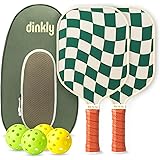
- Pickleball Paddles: Unlike the strung rackets used in tennis or badminton, pickleball players utilize solid paddles. These paddles are generally larger than a ping-pong paddle but smaller and lighter than a tennis racket, offering a balance of control and power. Materials such as wood, composite, or graphite are commonly employed in their construction.
- Pickleball Ball: The ball itself is another defining characteristic. It is a lightweight, plastic ball, typically perforated with holes. Its size is comparable to a tennis ball, but its material and construction give it a slower, more predictable bounce, allowing for extended rallies and strategic shot placement.
Mastering the Pickleball Serve and Basic Play
The serve initiates every point in pickleball, adhering to specific regulations that ensure fairness and encourage accessible play. Understanding these rules is paramount for anyone learning to play pickleball.
3. The Serve: Initiation of Play
A pickleball serve is executed underhand, with the point of contact between the paddle and the ball occurring below the server’s waist. This particular serving motion helps to maintain a slower pace of play, making the game more approachable for beginners and less physically demanding than an overhand tennis serve. The serve must be directed diagonally across the net, landing within the opponent’s designated service court. Only one serve attempt is permitted per point.
Should the serve fail to land correctly or violate any serving rules (e.g., hitting above the waist), a fault is declared, and the serving team loses the right to serve, or the point is awarded to the opponent in singles play. It is critical for the ball to clear the net and bounce within the designated service area for a legal serve to be achieved.
4. The Two-Bounce Rule: A Unique Challenge
One of the most distinctive and often initially confusing aspects of pickleball rules is the “two-bounce rule,” also known as the double-bounce rule. This regulation dictates that:
- The serve must bounce once on the receiver’s side before being returned.
- The return of the serve must then bounce once on the server’s side before being hit.
Consequently, the first two shots of any rally must be allowed to bounce before they are struck. After these initial two bounces have occurred, players are then permitted to hit the ball either as a volley (before it bounces) or after a single bounce, provided they are not within the non-volley zone.
This rule ensures that the receiving team is not immediately disadvantaged by a powerful serve, allowing for a more strategic and prolonged rally to develop. It is a fundamental aspect that shapes player positioning and shot selection in the early stages of a point.
5. The Non-Volley Zone (The Kitchen Rule)
The “kitchen rule” is another cornerstone of pickleball rules, designed to prevent aggressive net play and foster more strategic rallies. No player is allowed to hit a volley (a shot hit before the ball bounces) while standing within the non-volley zone. This means that if a player’s foot, or any part of their body or paddle, is touching the kitchen line or is inside the kitchen while attempting to volley the ball, a fault is committed. The intention behind this rule is to prevent players from dominating the net by smashing volleys, thus promoting groundstrokes and strategic placement.
It is important to note that players are permitted to enter the kitchen area if the ball has already bounced within it, or if they are simply retrieving a ball that has landed there. However, any subsequent shot hit from inside the kitchen must be a groundstroke, meaning the ball must bounce before being hit.
Essential Pickleball Scoring Rules
The scoring system in pickleball is unique, emphasizing the server’s role and requiring specific conditions for points to be awarded. Understanding how points are scored and lost is vital for successful gameplay.
6. Earning Points: The Server’s Advantage
In pickleball, points can only be scored by the serving team. If the receiving team commits a fault, the serving team gains a point. If the serving team commits a fault, they do not score a point, and the serve is passed to the opposing team (or the second server in doubles). Common scenarios resulting in a point for the server include:
- The opponent hits the ball out of bounds.
- The opponent hits the ball into the net.
- The opponent fails to observe the two-bounce rule.
- The opponent volleys the ball while standing in the non-volley zone.
- The opponent hits the ball after it has bounced twice on their side.
Games are typically played to 11 points, with the winning team needing to have a lead of at least two points. However, regional variations or competitive formats may sometimes extend games to 15 or 21 points, always maintaining the crucial two-point margin for victory. A match often consists of the best of three games.
7. Losing Points: Common Faults
A point is lost (or a “fault” is committed) when a player or team fails to adhere to the rules. Understanding these common faults is just as important as knowing how to score:
- Serving illegally (e.g., above the waist, out of bounds).
- Failing to let the ball bounce once on both sides for the first two shots (the two-bounce rule).
- Hitting the ball into the net.
- Hitting the ball out of bounds.
- Volleying the ball while standing in the non-volley zone (the kitchen).
- Hitting the ball after it has bounced more than once on your side.
When the serving team commits a fault, they lose their turn to serve, and the serve goes to the opponent. No points are scored in this instance. This system ensures that every point is hard-earned and emphasizes consistency in play.
8. Serving Side and Score Management
A unique aspect of pickleball rules involves tracking the score and the server’s position. When a server wins a point, they continue to serve but must switch sides of the court. If their score is even, they serve from the right side; if their score is odd, they serve from the left side. This strategy ensures equal opportunity for serving from both sides of the court throughout the game.
Conversely, if the serving team loses a rally (commits a fault), no point is awarded to either team, and the serve transitions to the opposing side. In doubles play, a team typically has two serves (one for each player) before the serve is transferred to the opponents, a detail that adds another layer of strategy, which is often covered in more advanced guides or dedicated videos on pickleball doubles rules.
Beyond the Basics: Enjoying Pickleball
The simplicity of the core pickleball rules allows for rapid learning and immediate enjoyment. Its inclusive nature means that within a week, many new players find themselves engaged in competitive and social play, a stark contrast to the extended skill acquisition period often associated with other racket sports. This rapid progression fuels the sport’s classification as the fastest-growing sport in many regions globally.
The social aspect of pickleball cannot be overstated. Its smaller court size naturally brings players into closer proximity, fostering communication and camaraderie during games. This makes it an ideal activity for friends, families, and community groups seeking an active and engaging way to spend time together. Whether you are looking for light exercise, competitive play, or simply a fun social outlet, pickleball offers an accessible and rewarding experience.
As you continue to familiarize yourself with these fundamental pickleball rules and techniques, consider expanding your knowledge to include more complex strategies, particularly for doubles play, which often introduces additional layers of nuance. The journey of learning to play pickleball is one filled with fun, fitness, and fantastic social connections.
Pickleball Primer: Your Questions Answered
What is pickleball?
Pickleball is a racket sport that blends elements of tennis, badminton, and ping-pong. It’s known for being easy to learn and very social, captivating players of all ages and skill levels.
What equipment do I need to play pickleball?
To play pickleball, you need solid paddles, which are generally larger than ping-pong paddles but smaller than tennis rackets. You also use a lightweight, plastic ball with holes, similar in size to a tennis ball but with a slower, more predictable bounce.
How big is a pickleball court and what are its main areas?
A pickleball court is 20 feet wide by 44 feet long, making it notably smaller than a tennis court. It features a net, service courts, and a distinctive ‘Non-Volley Zone’ (also called the kitchen) that extends seven feet back from the net on each side.
How do you serve in pickleball?
A pickleball serve is executed underhand, with the paddle making contact with the ball below the server’s waist. The serve must be directed diagonally across the net and land within the opponent’s designated service court.
What is the ‘Non-Volley Zone’ or ‘Kitchen Rule’?
The ‘Non-Volley Zone,’ or ‘kitchen,’ is an area seven feet from the net where players are not allowed to hit a volley (a shot hit before the ball bounces). If you are in the kitchen, you must let the ball bounce before you hit it.