As the United States’ fastest-growing sport for five consecutive years, with participation nearly doubling to 8.9 million players in 2022, pickleball has undeniably captivated a broad demographic. While the video above provides an excellent primer on the fundamental pickleball basics for new enthusiasts, delving deeper into the sport’s structural mechanics and strategic underpinnings reveals why its simplicity belies a profound complexity. This expert analysis expands upon those foundational concepts, offering a more granular perspective for those seeking to truly master the game.
The Evolving Landscape of Racket Sports: Why Pickleball Dominates
Pickleball is frequently characterized as a hybrid, a dynamic fusion drawing elements from badminton’s net play, tennis’s court coverage, and table tennis’s paddle-to-ball interaction. This synthesis is not merely an aesthetic choice; it’s a deliberate design that dictates unique tactical considerations. The sport’s genesis in the mid-1960s aimed to create an accessible, engaging activity for all ages, a goal it has demonstrably achieved. Its rapid ascent, particularly among adults over 55 and increasingly younger demographics, underscores its appeal as a low-impact yet highly engaging racket sport.
The modified court, a feature highlighted in beginner guides, is central to pickleball’s distinct strategic profile. Unlike tennis, where power often dominates, the smaller footprint of a pickleball court—precisely 20 feet wide by 44 feet long—emphasizes precision, soft hands, and strategic positioning. This design actively encourages dink rallies and volleys rather than aggressive groundstrokes, fostering a nuanced game of finesse. Understanding these inherent design choices is crucial for appreciating the core strategic tenets of pickleball beyond simply hitting the ball over the net.
Understanding Pickleball Court Dimensions: More Than Just a Smaller Tennis Court
The pickleball court’s dimensions are a critical factor influencing game flow and strategic depth. At 20 feet wide and 44 feet long, the court mirrors a doubles badminton court. The net height, consistently 36 inches at the sidelines and dropping to 34 inches in the center, presents a lower barrier than tennis, promoting a different angle of attack and defense. These precise measurements are instrumental in dictating shot selection and player positioning, compelling players to master softer, more controlled shots.
Central to pickleball court geometry is the “Non-Volley Zone,” colloquially known as the “Kitchen.” This seven-foot area extends from the net on both sides, creating a significant strategic demarcation. Players are prohibited from volleying the ball while standing within or stepping into this zone, including on the line itself. This rule is not arbitrary; it fundamentally alters gameplay by preventing players from aggressively smashing volleys from close range, thereby encouraging a more tactical game of dinking and short exchanges. The Kitchen transforms what might otherwise be a power-dominated sport into one that heavily rewards patience and precision placement.
The Critical Role of the Non-Volley Zone (The Kitchen)
The Non-Volley Zone (NVZ) is arguably the most defining rule of pickleball, directly shaping its unique strategic landscape. By preventing players from volleying inside the NVZ, the rule forces players to maintain distance from the net, necessitating a “soft game” strategy. This encourages the “dink,” a gentle shot hit just over the net into the opponent’s NVZ, designed to force an opponent to hit up or make a difficult shot. Mastery of the dink, coupled with the ability to execute effective third shot drops into the NVZ, is a hallmark of advanced pickleball play.
The strategic implication of the NVZ is profound. It dictates player movement, shot selection, and the rhythm of a rally. Players must constantly weigh the risk and reward of approaching the net, understanding that a forceful volley must be initiated outside the seven-foot boundary. This emphasis on finesse over raw power cultivates a distinct style of play that differentiates pickleball from its racket sport cousins, highlighting the importance of ball control and court awareness over sheer athleticism.
Mastering Pickleball Serving Rules: Precision and Position
The serve in pickleball is a foundational element, governed by specific rules designed to ensure fair play and initiate rallies effectively. Unlike tennis, the serve must be executed underhand, with the paddle head below the wrist at the point of contact. Furthermore, the ball must be contacted below the server’s waist, and it is typically dropped from the hand before striking. These constraints ensure a less powerful, more controlled serve, emphasizing placement over velocity, a critical feature for maintaining the sport’s accessible nature.
Servers must stand behind the baseline and direct their serve diagonally across the net, ensuring it lands within the opponent’s service court, clearing the Non-Volley Zone. Each player on a team serves until they commit a fault, at which point the serve passes to the partner (in doubles) or the opposing team. This system adds a layer of strategic decision-making regarding which player serves first, leveraging individual strengths. Understanding the nuances of these serving rules is paramount for consistent play and avoiding unforced errors, setting the stage for every rally in pickleball.
The “Two-Bounce Rule”: A Core Strategic Element
Following the serve, a crucial rule governing pickleball play is the “Two-Bounce Rule.” This mandates that the receiving team must allow the served ball to bounce once before returning it. Subsequently, the serving team must also allow the returned ball to bounce once before initiating their shot. Only after these initial two bounces—one on each side of the court—can players hit the ball out of the air (volley) or allow it to bounce. This rule is pivotal in preventing serve-and-volley strategies, forcing players to engage in groundstrokes at the start of a rally.
The strategic impact of the two-bounce rule is significant, as it fundamentally slows down the initial phase of the game. This provides both teams an opportunity to advance to the Non-Volley Zone line in a controlled manner, setting up for strategic dink exchanges. It reduces the advantage of a powerful serve and encourages skill in shot placement and court positioning rather than aggressive net play from the outset. This rule is a key contributor to pickleball’s reputation as a sport emphasizing patience and tactical setup over immediate power plays.
The Strategic Art of Pickleball Scoring: A Point-Based System
Pickleball employs a unique scoring system that directly influences game strategy and the mental aspects of competition. Points can only be scored by the serving team. This critical distinction means that even if the receiving team plays a flawless rally, they cannot earn a point if they are not the server. Instead, they gain the opportunity to serve, shifting momentum and pressure. Games are typically played to 11 points, with the winning team requiring a margin of at least two points. Understanding this scoring dynamic is vital for managing game flow and pressure points.
In doubles, the serving sequence is further nuanced. At the start of a game, only the first server on the initial serving team gets one fault before the serve transitions to the opponent. Thereafter, both players on a team serve until they commit a fault, at which point it becomes a “side out” and the serve passes to the opposing team. Players typically announce three numbers before each serve: the current score of the serving team, the current score of the receiving team, and the current server number (1 or 2). This system, while initially complex for newcomers, adds a layer of strategic thinking, as teams must decide when to be aggressive and when to play safe, always with the understanding that only the server can advance the score. Mastering these pickleball basics of scoring is essential for competitive play.
Essential Pickleball Equipment: Tools for Success
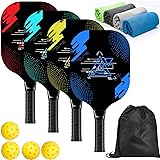
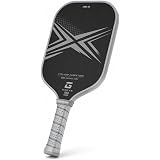
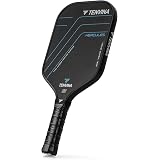
While the video provides an introduction to equipment essentials, a deeper look reveals how specific choices can significantly impact performance. The pickleball paddle, for instance, has evolved considerably from its wooden origins. Modern paddles typically feature composite materials like graphite or carbon fiber faces, often layered over a polymer or aluminum honeycomb core. Paddle weight, ranging from approximately 7.0 to 8.5 ounces, affects power, control, and maneuverability. Lighter paddles offer quicker hand speed and finesse, while heavier paddles provide more power and stability. Grip size is also crucial for comfort and injury prevention, typically ranging from 4 to 4.5 inches in circumference.
The pickleball itself is a key component, differing based on play environment. Outdoor pickleballs are generally harder, feature smaller holes (around 40 holes of 0.25 inches diameter), and are designed for durability and consistent flight in windy conditions. Indoor pickleballs, conversely, are typically softer, have larger holes (around 26 holes of 0.44 inches diameter), and offer a slightly slower, more controlled bounce. Choosing the appropriate ball is paramount for optimizing play. Lastly, proper footwear, specifically court shoes designed for lateral movement and support, is crucial for injury prevention and maximizing agility on the court. These equipment choices, while seemingly minor, collectively contribute to a player’s ability to execute advanced pickleball basics effectively.
Serving Up Answers: Your Pickleball Q&A
How big is a pickleball court?
A pickleball court is 20 feet wide and 44 feet long, mirroring the size of a doubles badminton court. The net height is 36 inches at the sidelines and 34 inches in the center.
What is the ‘Kitchen’ in pickleball?
The ‘Kitchen’ is officially called the Non-Volley Zone (NVZ), a seven-foot area extending from the net on both sides of the court. Players are not allowed to hit the ball out of the air (volley) while standing inside this zone.
How do you serve in pickleball?
Serves must be hit underhand, with the paddle head below the wrist and contact made below the server’s waist. The serve must land diagonally across the net in the opponent’s service court, clearing the Non-Volley Zone.
What is the ‘Two-Bounce Rule’ in pickleball?
The ‘Two-Bounce Rule’ mandates that the served ball must bounce once on the receiving team’s side, and then the return shot must also bounce once on the serving team’s side. Only after these two initial bounces can players hit the ball out of the air (volley).