The exhilarating world of Pickleball, a sport rapidly capturing the hearts of players worldwide, might seem daunting at first glance. Many new enthusiasts are often faced with the challenge of deciphering its unique blend of rules, which combine elements from tennis, badminton, and table tennis. Fortunately, understanding the core principles of Pickleball is more straightforward than often perceived, making it an incredibly accessible game for all ages and skill levels. Below, a comprehensive guide is presented to help demystify the essential rules of Pickleball, expanding on the visual explanations provided in the accompanying video.
Decoding Pickleball Rules: Your Essential Guide
Pickleball is frequently celebrated as an easy-to-learn, less physically demanding, and highly social alternative to more traditional racket sports. It is a sport where strategic play and precision are often prioritized over brute strength or extensive court coverage. This unique combination makes it an ideal activity for a diverse range of participants, from children to seniors, all of whom can enjoy its engaging rallies and competitive spirit. The primary objective in Pickleball is quite simple: a team or individual aims to score points and win sets more efficiently than their opponents. With specific rules governing the court, equipment, serving, and unique zones, the game is designed to maintain a balanced and exciting pace for everyone involved.
The Court, Equipment, and Basic Setup for Pickleball
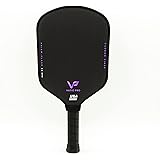
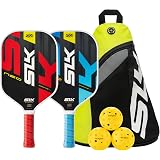
The foundation of any Pickleball game lies in its playing environment and the equipment utilized. A Pickleball court, mirroring the dimensions of a standard badminton court, measures 44 feet in length and 20 feet in width. This relatively compact size contributes significantly to the sport’s accessibility, allowing for easier court coverage and more focused play. A net, positioned precisely 3 feet above the ground, divides the court into two halves, over which the ball must be skillfully navigated. Furthermore, distinctive lines delineate various play areas, including the critical no volley zone, which is marked 7 feet away from the net on each side. The equipment itself is also designed for ease of use, featuring a solid, lightweight paddle and a perforated plastic ball, often compared to a wiffle ball, which ensures a slower flight and a softer impact, reducing strain on players’ bodies.
Understanding the Serve: Starting a Pickleball Game
The initiation of play in Pickleball is governed by specific serving rules that are crucial for a fair start to each rally. To begin a point, a player must stand behind the service line, which is located at the back of their court. The serve is executed by striking the ball underhand, ensuring that the paddle makes contact with the ball below the server’s waist. The ball must then be hit diagonally across the net, landing within the opponent’s designated service area. If the serve does not land within this specific diagonal box, or if it hits the net and fails to clear, it is considered a fault, and the serving side may lose their serve, depending on the game format. The proper execution of a serve is fundamental, as it sets the tone for the ensuing rally and is often a strategic advantage for the serving team.
The Unique Two-Bounce Rule in Pickleball
Perhaps one of the most distinctive and often initially confusing rules in Pickleball is the two-bounce rule, sometimes referred to as the double-bounce rule. This rule dictates that after the serve, the ball must be allowed to bounce once on the receiver’s side of the court before being returned. Subsequently, the serving team must also allow the returned ball to bounce once on their side before they can hit it back. This means that for the very first two shots of any rally – the serve return and the subsequent shot from the server – volleys are strictly prohibited. The purpose of this rule is to eliminate any unfair advantage that might be gained by immediate net play, ensuring that both teams are positioned further back in the court and have an equal opportunity to establish a rally. Consequently, rallies often develop with a more strategic pace, promoting longer exchanges and a focus on groundstrokes.
Scoring Points and Winning Sets in Pickleball
The objective of scoring points and ultimately winning sets is central to competitive Pickleball play. A point is only awarded to the serving team when they successfully win a rally. If the serving team commits an infraction or fails to return the ball legally, they lose the right to serve, but no point is scored by the opposing team in that instance. To win a set, a team or player must reach 11 points and simultaneously hold a lead of at least two points over their opponent. For example, a score of 11-9 would result in a set win, but a score of 11-10 would require continued play until a two-point margin is achieved, such as 12-10 or 13-11. Typically, the match is won by the player or pair who is first to secure victory in two out of three sets, though variations in match formats can certainly be observed.
Navigating the Kitchen: The No Volley Zone Rule Explained
A pivotal and often misunderstood rule in Pickleball concerns the “no volley zone,” affectionately nicknamed “the kitchen.” This area, extending 7 feet from the net on both sides of the court, is crucial for maintaining the game’s unique flow and strategic depth. Within the kitchen, players are expressly forbidden from hitting the ball out of the air, or “volleying.” If a player’s foot, or any part of their body or paddle, is touching the kitchen line or is inside the kitchen while they are attempting to volley the ball, an infraction is committed, resulting in the loss of the rally. This rule is designed to prevent players from dominating the net by smashing the ball down into their opponents’ court, thereby encouraging more strategic groundstrokes and dinks. It requires players to stay outside this zone for volleys, emphasizing finesse and patience over power.
Common Infractions and How They Impact Play
To ensure fair play and maintain the integrity of the game, various actions are considered infractions in Pickleball, leading to the loss of a rally for the offending player or team. For instance, hitting the ball outside the designated playing area, whether over the baseline or wide of the sidelines, results in an immediate fault. Similarly, if the ball is hit into the net and does not successfully clear to the opponent’s side, the rally is lost. It is also forbidden for a player to strike the ball twice in succession, as this is considered a double hit. Furthermore, the ball must only be contacted with the paddle; any touch by a player’s body, intentionally or unintentionally, constitutes an infraction. As previously detailed, volleying while any part of the player is within the no volley zone is another common fault. Understanding and avoiding these infractions is key to maintaining control of the game and maximizing scoring opportunities.
Service Rules for Singles Play
When Pickleball is enjoyed in a singles format, where one player competes against another, the service rules are adjusted to suit the dynamics of one-on-one play. At the start of a player’s turn to serve, the first serve of their rotation is always initiated from the right-hand side of their court. Should the serving player successfully win the rally, they are awarded a point, and they then switch to serve the subsequent rally from the left-hand side of their court. This alternation between the right and left service courts continues for as long as the player continues to win rallies and, consequently, score points. The serve then transitions to the opponent once the serving player loses a rally, ensuring that both players have opportunities to serve and score throughout the game.
Mastering Doubles Service Rules in Pickleball
The doubles format of Pickleball introduces a slightly more intricate set of service rules, designed to balance opportunities for both teams. In doubles, each pair is typically granted two serves per rotation. The first player to serve for their team begins from the right-hand service court. If this server wins the rally, a point is scored, and they continue to serve from the alternating side, just as in singles. However, if the first server loses the rally, their partner then steps up to serve, initiating what is known as the “second serve.” This partner serves from the court side that is appropriate for the score, depending on whether the previous rally was won or lost by their team. If the second server also loses their rally, this situation is termed a “side out,” and the right to serve then transfers to the opposing team. This system ensures that both partners have a chance to serve, providing strategic depth and maintaining competitive balance throughout the match.
Why Pickleball is So Accessible and Popular
The remarkable rise in popularity of Pickleball can be attributed to its inherent simplicity, its low barrier to entry, and its inclusive nature. It is widely regarded as one of the fastest-growing sports globally, appealing to a vast demographic due to its minimal fitness requirements and easy-to-grasp rules. Unlike many other racket sports that demand years of training and significant physical exertion, Pickleball can be quickly picked up by nearly anyone, often within a single session. The unique blend of tennis, badminton, and table tennis elements creates a familiar yet novel experience that is both engaging and enjoyable. Its social aspect is also a significant draw, fostering community and friendly competition on courts found in parks, community centers, and dedicated clubs around the world. The combination of simple rules, accessible equipment, and a welcoming atmosphere ensures that “Pickleball rules” for fun and fitness are truly universal.
Serving Up Answers: Your Pickleball Rules Q&A
What is Pickleball?
Pickleball is an easy-to-learn, social racket sport that combines elements of tennis, badminton, and table tennis. It’s known for being less physically demanding and accessible to all ages and skill levels.
What equipment is used to play Pickleball?
To play Pickleball, you use a solid, lightweight paddle and a perforated plastic ball, often compared to a wiffle ball. The game is played on a court with a net, similar to a badminton court.
How do you serve the ball in Pickleball?
To serve, you must stand behind the service line and hit the ball underhand below your waist with the paddle. The ball must travel diagonally over the net and land within the opponent’s designated service area.
What is the two-bounce rule?
The two-bounce rule dictates that after the serve, the ball must bounce once on the receiver’s side, and then the return shot must also bounce once on the serving team’s side. Players cannot hit the ball out of the air (volley) until these two bounces have occurred.
What is the ‘kitchen’ in Pickleball?
The ‘kitchen’ is also known as the no volley zone, an area extending 7 feet from the net on both sides of the court. Players are strictly forbidden from hitting the ball out of the air (volleying) while standing inside this zone or on its line.