The meteoric rise of pickleball, evidenced by its status as America’s fastest-growing sport for several consecutive years, continues to attract top-tier athletic talent and generate significant spectator interest. Within this dynamic landscape, the exhibition featuring legendary tennis icons Andre Agassi and John McEnroe, alongside fellow pros James Blake and Jack Sock, has become a pivotal event. This star-studded Agassi vs. McEnroe pickleball match not only captivated audiences but also offered a fascinating case study on the convergence of tennis prowess and specific pickleball strategies. The contest, brimming with both high-level play and characteristic theatricality from McEnroe, underscored how elite athletes adapt to new challenges while showcasing the distinctive nuances of pickleball.
The transition from the expansive tennis court to the more confined pickleball grid demands a unique recalibration of skills, a process visibly navigated by these seasoned professionals. While power hitting, familiar to tennis, can be an asset, the fundamental strategies of pickleball emphasize precision, soft play, and mastery of the non-volley zone. Spectators of this particular pickleball match witnessed firsthand the blend of existing athletic gifts with the rapid acquisition of new techniques. The match highlighted the strategic depth of pickleball, proving it to be far more than just a casual backyard game, especially when played by individuals of such caliber.
Tennis Legends Adapt to the Pickleball Court
Watching Andre Agassi and John McEnroe, two of tennis’s most iconic figures, compete in a high-profile pickleball exhibition provided a compelling spectacle for fans across both sports. The shift in court dimensions and equipment, from tennis rackets to solid paddles, necessitated a significant tactical adjustment. Agassi, renowned for his groundstroke consistency and return of serve, demonstrated how his superior ball-striking ability seamlessly translated to generating powerful drives in pickleball. His ability to dictate rallies and exploit openings, a hallmark of his tennis career, was clearly evident on the pickleball court as he consistently applied pressure.
John McEnroe, infamous for his deft touch and legendary serve-and-volley game, found different avenues for his talent, albeit with his customary on-court antics. His nuanced net play and strategic positioning, vital components of doubles tennis, proved beneficial in the fast-paced kitchen exchanges characteristic of competitive pickleball. Alongside former top-ranked players James Blake and Jack Sock, the dynamic interplay of their respective tennis backgrounds created an engaging competitive environment. The match underscored that while raw athleticism is valuable, specific pickleball strategies and rules mandate a deliberate refinement of technique and court awareness.
Strategic Elements of High-Level Pickleball
The Agassi McEnroe pickleball match served as an excellent instructional demonstration, particularly in showcasing critical pickleball strategies that differentiate it from other racket sports. One of the most frequently discussed elements during the match was the “non-volley zone,” colloquially known as the “kitchen.” This seven-foot area on each side of the net, where players are prohibited from volleying the ball, fundamentally reshapes rally dynamics and emphasizes soft play. Mastering this area is paramount, as it forces players to approach the net cautiously and employ strategic dinks and drops to gain an advantage.
The video commentary specifically highlighted the importance of the third shot drop, a cornerstone of advanced pickleball strategy. This shot, often hit after the serve return, aims to land softly in the opponent’s non-volley zone, forcing them to hit up on the ball. This allows the serving team time to advance to the net and assume an offensive position. Conversely, a powerful “third shot drive” from Agassi was lauded, indicating a strategic choice to bypass the soft game and instead attack opponents aggressively. The deliberate execution of these shots, observed throughout the celebrity pickleball event, illustrates the intricate tactical planning required at an elite level.
The Non-Volley Zone: A Strategic Imperative
The non-volley zone, or “kitchen,” is arguably the most distinctive rule in pickleball, deeply influencing player positioning and shot selection. Its presence dictates that players cannot hit a volley while standing within this designated area. This rule prevents aggressive spiking from the net, promoting rallies that involve strategic dinking and soft play. In the Agassi vs. McEnroe pickleball match, instances of foot faults into the kitchen were observed, highlighting the challenge even for experienced athletes to adhere to this unique constraint.
A foot fault, as demonstrated by McEnroe’s disputed call, occurs when any part of a player’s foot touches the non-volley zone line or the zone itself during a volley. Such infractions result in a loss of point or serve, underscoring the strict spatial awareness required for pro pickleball play. The strategic implications are profound: players must develop excellent touch and control to keep the ball low and their opponents at bay, while simultaneously positioning themselves optimally to defend against drops and drives. Successfully navigating the kitchen becomes a high-stakes dance, crucial for winning points and maintaining offensive pressure.
Mastering the Third Shot: Drop vs. Drive
The third shot in pickleball, following the serve and the return, is often considered the most important shot in a rally, dictating the subsequent flow of play. Expert players like those in the Agassi McEnroe pickleball match constantly assess whether to execute a third shot drop or a third shot drive. A well-executed third shot drop, as discussed in the video, allows the serving team to approach the net safely, neutralizing the advantage often held by the receiving team. This soft shot ideally lands just over the net in the opponent’s kitchen, forcing them to hit an upward shot which can then be attacked.
Conversely, a third shot drive, characterized by more pace and aggression, aims to push opponents back from the net or create immediate winning opportunities. Agassi’s powerful “third shot drive” was notably effective, leveraging his tennis background to generate significant velocity. The decision to employ a drop or a drive depends on various factors, including opponent positioning, wind conditions, and the player’s own strengths. This tactical dilemma showcases the mental chess involved in every point of a pickleball game, demanding quick analysis and precise execution under pressure.
The Personality Factor: McEnroe’s Enduring Competitive Spirit
John McEnroe’s presence in the Agassi vs. McEnroe pickleball match brought an undeniable element of entertainment and competitive fire, echoing his storied career in professional tennis. His infamous racket throw and vociferous disputes with the referee, even over minor infractions like foot faults, were a stark reminder of his passionate, confrontational style. While such displays might be less common in casual pickleball, they highlight the intense psychological aspect of competition at the elite level. His theatrics, though potentially distracting, also served to energize the crowd and add a unique flavor to the exhibition.
This fiery competitive spirit, a hallmark of many great athletes, demonstrates a relentless pursuit of perfection and an unwavering belief in one’s own judgment. It showcases that even in a seemingly ‘friendly’ exhibition, the inherent desire to win remains potent. For those new to pickleball, witnessing McEnroe’s animated arguments over rules like the non-volley zone offered a memorable, albeit exaggerated, lesson in the game’s regulations and the passion players bring. The competitive dynamics of the Andre Agassi pickleball showdown were as much about the personalities involved as the points scored.
Innovation in Equipment: The Rise of Quieter Paddles
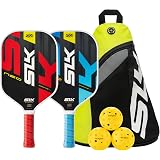
An intriguing data point revealed during the Agassi vs. McEnroe pickleball match commentary concerned the technological advancements in pickleball equipment, specifically the mention of paddles that are “50% quieter than the traditional paddle.” This statistic points to a significant industry effort to address one of the common criticisms leveled against pickleball: noise pollution. The distinctive “pop” sound of the ball hitting traditional paddles can be disruptive, particularly in residential areas where courts are often located. Innovations like these are crucial for the sport’s continued growth and acceptance, making it more community-friendly.
The development of quieter paddles, often through advanced core materials and surface technologies, demonstrates a commitment to refining the player experience and mitigating environmental impact. Such innovations not only enhance playability but also broaden the sport’s appeal, enabling its expansion into more diverse settings. This focus on equipment evolution is not merely about performance; it reflects a broader trend of thoughtful development within the pickleball community to ensure the sport’s sustainable future. The fact that a pro player like McEnroe would be using a new Al paddle suggests an endorsement of such innovations by top athletes.
Integrating Tennis Acumen into Modern Pickleball
The exhibition featuring Agassi, McEnroe, Blake, and Sock explicitly illustrated how core skills from tennis can translate effectively to the pickleball court, offering a blueprint for crossover athletes. Announcers observed that “ball striking translates,” a testament to the fundamental hand-eye coordination and racket (or paddle) control cultivated through years of tennis. The ability to generate pace, control angles, and execute precise volleys are transferable assets that allow former tennis players to quickly adapt to professional pickleball.
However, the match also subtly underscored the need for adaptation, particularly in understanding the unique pacing and strategic geometry of pickleball. The emphasis on the short game, the strategic “dink” rallies at the net, and the importance of the third shot all require a different approach than the baseline-dominance often seen in tennis. Players must temper their power with finesse, developing a softer touch and a keen sense of court positioning. The rapid success of tennis pros in pickleball showcases not just their raw talent but also their capacity for quick strategic learning and physical adjustment, making the Agassi McEnroe pickleball match a compelling watch for all racket sports enthusiasts.
Serving Up Answers on the Pickleball Match of Legends
What is the main event discussed in this article?
The article focuses on an exhibition pickleball match that featured legendary tennis players Andre Agassi and John McEnroe, along with James Blake and Jack Sock.
What is the ‘non-volley zone’ in pickleball?
The ‘non-volley zone,’ often called the ‘kitchen,’ is a seven-foot area on each side of the net where players are not allowed to hit the ball out of the air (volley).
Why is the ‘third shot’ important in pickleball?
The third shot, which follows the serve and the return, is considered very important because it often dictates the rally’s flow and helps players advance to the net to gain an advantage.
Can tennis players easily adapt to pickleball?
Yes, many tennis skills like ball striking and volleys can translate well to pickleball, but players also need to adapt to the smaller court, unique strategies, and rules like the non-volley zone.